Can the Bible Be Trusted Historically?
The Bible is the most widely distributed and translated book in human history. But can it actually be trusted? Was it corrupted over centuries of copying? Who decided which books to include? This article examines the evidence.
Who Wrote the Bible?
The Bible was written by approximately 40 different authors over a span of roughly 1,500 years. These authors included kings (David, Solomon), prophets (Isaiah, Jeremiah), fishermen (Peter), a tax collector (Matthew), a doctor (Luke), and a tentmaker turned apostle (Paul). Despite this diversity, Christians believe the Holy Spirit guided each author, producing a unified message of God's love and plan for humanity.
The Manuscript Evidence
The New Testament has more manuscript evidence than any other ancient text — by a massive margin:
- Homer's Iliad — approximately 1,800 manuscripts, earliest copy 400 years after the original.
- Julius Caesar's Gallic Wars — approximately 10 manuscripts, earliest copy 1,000 years after the original.
- The New Testament — over 5,800 Greek manuscripts, with the earliest fragments dating to within 25-50 years of the original writings.
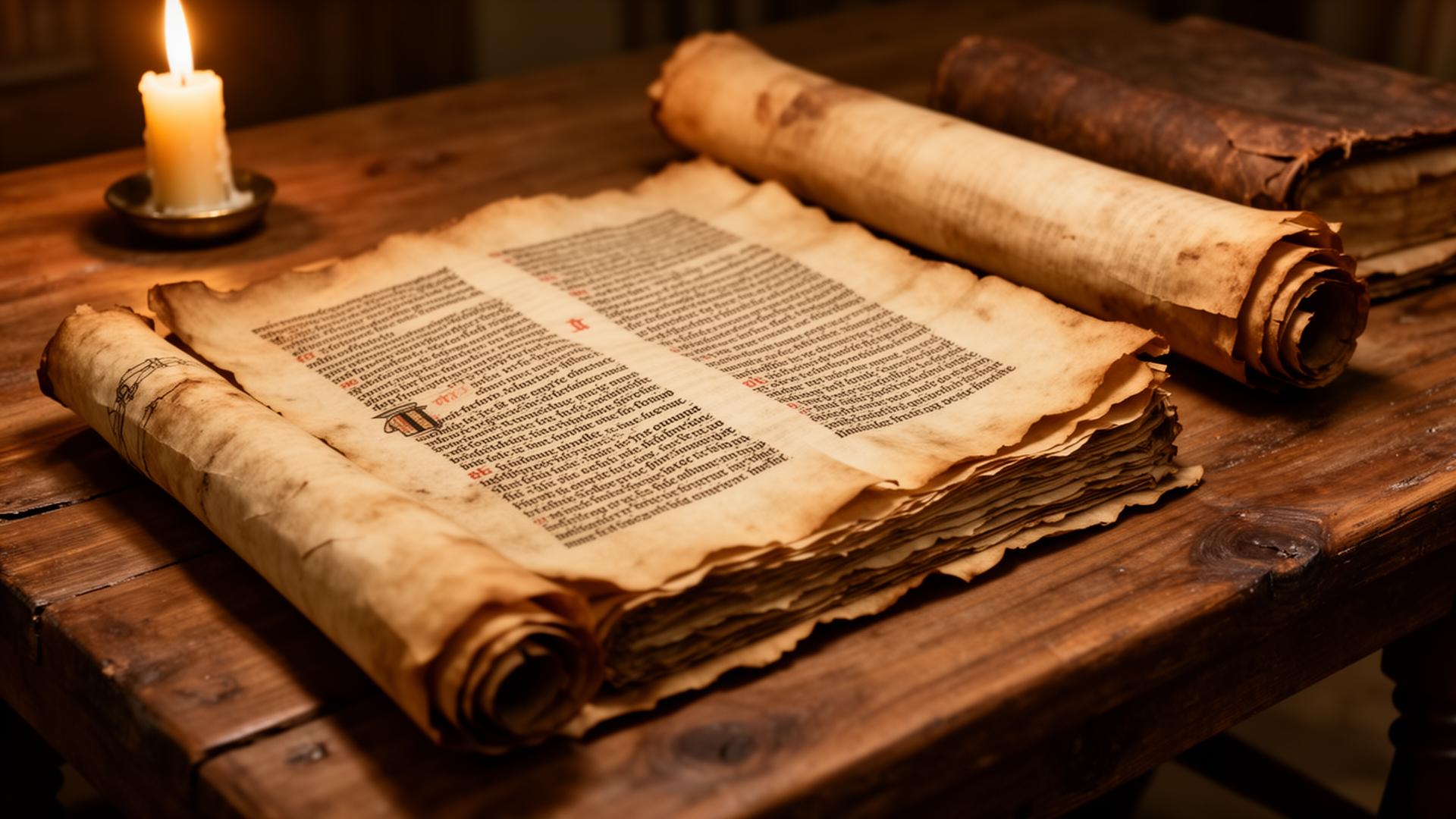
The Dead Sea Scrolls, discovered in 1947, contained copies of Old Testament books dating to 150 BC — over 1,000 years older than any previously known Hebrew manuscripts. When scholars compared them to later copies, the texts were virtually identical, demonstrating extraordinary accuracy in transmission.
Archaeological Confirmation
Archaeology has repeatedly confirmed biblical accounts once dismissed as mythology:
- The Pool of Bethesda (John 5:2) — discovered in the 19th century, exactly as described.
- The inscription of Pontius Pilate — discovered in Caesarea in 1961, confirming his historical existence.
- The House of David inscription — discovered at Tel Dan in 1993, confirming King David as a historical figure.
- The city of Jericho — excavations show collapsed walls consistent with the biblical account.
Why Are There Different Translations?
Different translations exist not because the source material is unreliable, but because translators face choices about how to render ancient Hebrew and Greek into modern languages. Some translations prioritise word-for-word accuracy (e.g., NASB, RSV), while others prioritise thought-for-thought readability (e.g., NIV, NLT). The underlying manuscripts remain the same.
The Catholic Church uses approved translations that faithfully reflect the original texts, including the New American Bible (NAB), the Revised Standard Version — Catholic Edition (RSV-CE), and the Jerusalem Bible.
Why Does the Catholic Bible Have More Books?
The Catholic Bible contains 73 books (46 Old Testament + 27 New Testament), while most Protestant Bibles contain 66 books. The additional seven books — Tobit, Judith, 1 & 2 Maccabees, Wisdom, Sirach, and Baruch — are called the deuterocanonical books. These were part of the Greek Septuagint (the Old Testament used by the early Church) and were included in the canon defined at the Council of Rome (382 AD) and reaffirmed at Trent (1546).
Read the Bible for Yourself
The best way to judge the Bible's trustworthiness is to read it. Start with the Gospels and experience the words of Jesus firsthand: