The Mystery of the Holy Trinity Explained Simply
The Holy Trinity is one of the most profound and misunderstood doctrines in Christianity. Even lifelong believers sometimes struggle to explain it. Yet it stands at the very heart of Christian faith: one God, three persons — Father, Son, and Holy Spirit.
What Does "Trinity" Actually Mean?
The word "Trinity" comes from the Latin trinitas, meaning "threefold." It was first used by the early Church Father Tertullian around 200 AD to describe what Scripture reveals: God is one divine being who exists eternally as three distinct persons. The Father is God. The Son is God. The Holy Spirit is God. Yet there are not three Gods — there is one God.
This is not a contradiction. It is a mystery — something that exceeds human comprehension but does not violate reason. As Saint Augustine wrote: "If you understand it, it is not God."
God the Father — The Source of All
The Father is the first person of the Trinity. He is the unbegotten source, the Creator who spoke the universe into existence. Jesus constantly referred to God as "my Father" and taught us to pray "Our Father, who art in heaven" (Matthew 6:9).
The Father is not a distant cosmic force. He is personal, relational, and intimately involved in creation. "Are not two sparrows sold for a penny? Yet not one of them will fall to the ground outside your Father's care" (Matthew 10:29).
God the Son — Jesus Christ
The Son is the second person of the Trinity. Christians believe Jesus Christ is fully God and fully human — the Word made flesh (John 1:14). He was not created; He was "begotten, not made, one in Being with the Father" (Nicene Creed).
Through Jesus, the invisible God became visible. He healed the sick, forgave sinners, challenged religious hypocrisy, and ultimately gave His life on the cross to reconcile humanity with God. His resurrection on the third day is the foundation of Christian hope.
God the Holy Spirit — The Advocate
The Holy Spirit is the third person of the Trinity. Jesus promised to send the Spirit after His ascension: "The Advocate, the Holy Spirit, whom the Father will send in my name, will teach you all things" (John 14:26).
At Pentecost, the Holy Spirit descended upon the apostles as tongues of fire, empowering them to preach the Gospel in languages they had never learned (Acts 2). The Spirit continues to guide, sanctify, and strengthen believers today — through prayer, the sacraments, and the gifts of the Spirit.
Where Is the Trinity in the Bible?
While the word "Trinity" does not appear in Scripture, the concept permeates it:
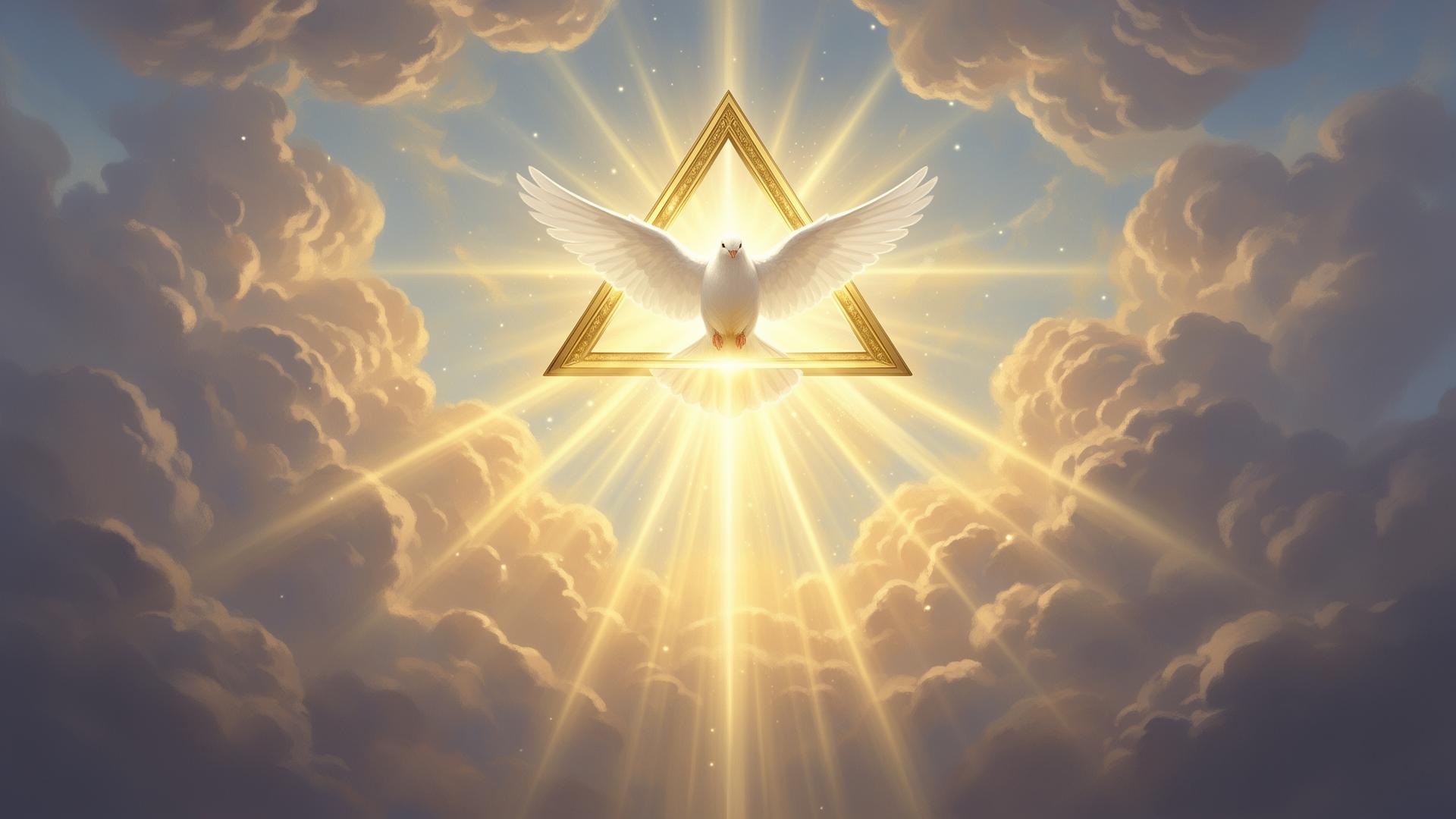
- The Baptism of Jesus (Matthew 3:16-17) — The Son is baptised, the Spirit descends as a dove, and the Father's voice speaks from heaven.
- The Great Commission (Matthew 28:19) — Jesus commands baptism "in the name of the Father and of the Son and of the Holy Spirit."
- The Apostolic Blessing (2 Corinthians 13:14) — "The grace of the Lord Jesus Christ, the love of God, and the fellowship of the Holy Spirit be with you all."
- Creation (Genesis 1:1-2, John 1:1-3) — God creates, the Spirit hovers over the waters, and all things are made through the Word.
Common Misunderstandings
Several heresies throughout history have tried to simplify the Trinity by denying one of its aspects:
- Modalism — Claims God is one person who appears in three "modes" (like wearing different hats). This denies the distinct personhood of Father, Son, and Spirit.
- Arianism — Claims Jesus was a created being, not truly God. The Council of Nicaea (325 AD) definitively rejected this.
- Tritheism — Claims there are three separate Gods. Christianity firmly maintains monotheism.
Why Does the Trinity Matter?
The Trinity reveals that God is relational at His core. Before creation existed, there was already love — the Father loving the Son, the Son loving the Father, their love being the Holy Spirit. This means love is not something God does; it is what God is.
For believers, this has profound implications: we are created in the image of a God who is community, relationship, and self-giving love. Our deepest fulfilment comes not in isolation but in communion — with God and with one another.