How the Catholic Church Is Organised — From Pope to Parish
With over 1.3 billion members across every continent, the Catholic Church is the largest and oldest continuously operating institution in the world. Its organisational structure — refined over two millennia — balances universal unity with local pastoral care. Understanding this structure helps us appreciate how the faith reaches from the Vatican all the way to a village parish in rural Zimbabwe.
The Foundation: Apostolic Succession
Catholic teaching holds that the Church's authority flows in an unbroken line from Jesus Christ through the Apostles to the bishops of today. This principle, known as apostolic succession, is the doctrinal cornerstone of the entire hierarchy. When Jesus said to Peter, "You are Peter, and on this rock I will build my Church" (Matthew 16:18), Catholics believe he established a visible, structured community with Peter as its first leader.
The Pope: Vicar of Christ
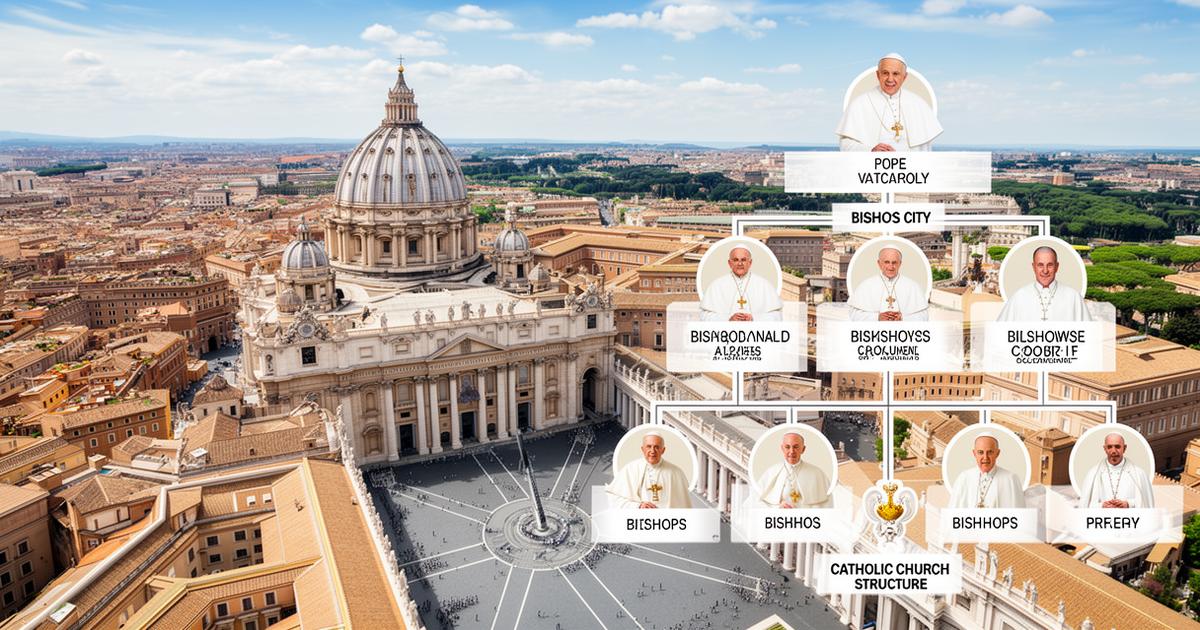
At the summit of the Church's structure stands the Pope — the Bishop of Rome and successor of Saint Peter. The Pope holds supreme authority in matters of faith, morals, and Church governance. When speaking ex cathedra (from the chair of Peter) on matters of doctrine, the Pope is considered infallible — not because he is personally perfect, but because the Church believes the Holy Spirit protects the office from teaching error in such solemn declarations.
The Pope governs with the assistance of the Roman Curia, a collection of departments (called dicasteries) that handle everything from doctrine to charitable works to communication. Think of the Curia as the Church's "civil service" — thousands of clergy and lay experts managing the day-to-day operations of a global institution.
Cardinals: Advisors and Electors
Cardinals are senior bishops appointed by the Pope to serve as his closest advisors. Their most famous responsibility is electing a new Pope in a gathering called a conclave. Cardinals under age 80 are eligible to vote, and they are locked inside the Sistine Chapel until white smoke signals a new pontiff has been chosen — a tradition dating back centuries.
Bishops: Shepherds of Dioceses
The world is divided into roughly 3,000 dioceses, each led by a bishop. A bishop is the chief teacher, priest, and pastor of his diocese. He ordains priests, confirms the faithful, and ensures that Church teaching is faithfully transmitted. An archbishop leads a more prominent diocese (called an archdiocese) and may have supervisory responsibilities over neighbouring dioceses.
Bishops exercise their collective authority through ecumenical councils — gatherings of all the world's bishops with the Pope. The most recent, the Second Vatican Council (1962–65), profoundly reshaped Catholic worship, outreach, and relations with other faiths.
Priests and Deacons: The Parish Level
Priests are the backbone of Catholic pastoral life. Ordained by their bishop, they celebrate Mass, hear confessions, baptise, marry, and anoint the sick. Most Catholics interact with the Church primarily through their parish priest, who serves as teacher, counsellor, and spiritual father.
Deacons serve at the next level. They may be transitional (on their way to priesthood) or permanent. Permanent deacons may be married and serve by proclaiming the Gospel, assisting at Mass, performing baptisms and weddings, and leading charitable ministries.
Religious Orders: Communities of Consecrated Life
Beyond the diocesan structure, thousands of men and women live in religious orders — communities bound by vows of poverty, chastity, and obedience. The Benedictines are the oldest Western order, focused on prayer and work. The Franciscans emphasise simplicity and service to the poor. The Dominicans are devoted to preaching and teaching. The Jesuits are renowned for education and missionary work worldwide — including in Africa, where they established some of the continent's finest schools.
The Laity: The People of God
The vast majority of Catholics are lay people — the faithful who live their vocation in the world. The Second Vatican Council emphasised that the laity are not passive recipients of the faith but active participants in the Church's mission. Lay people serve as catechists, lectors, extraordinary ministers of Holy Communion, choir members, and leaders of parish organisations.
In Zimbabwe and across Africa, the laity play an especially vibrant role — leading prayer groups, composing and performing sacred hymns in Shona and Ndebele, and keeping the faith alive in communities where priests may visit only occasionally.
Canon Law: The Church's Legal Framework
All of this structure operates under Canon Law — the Church's own legal code. The current Code of Canon Law (1983) governs everything from the process of electing a Pope to the requirements for a valid marriage. It ensures consistency and justice across a vast, diverse, global institution.