
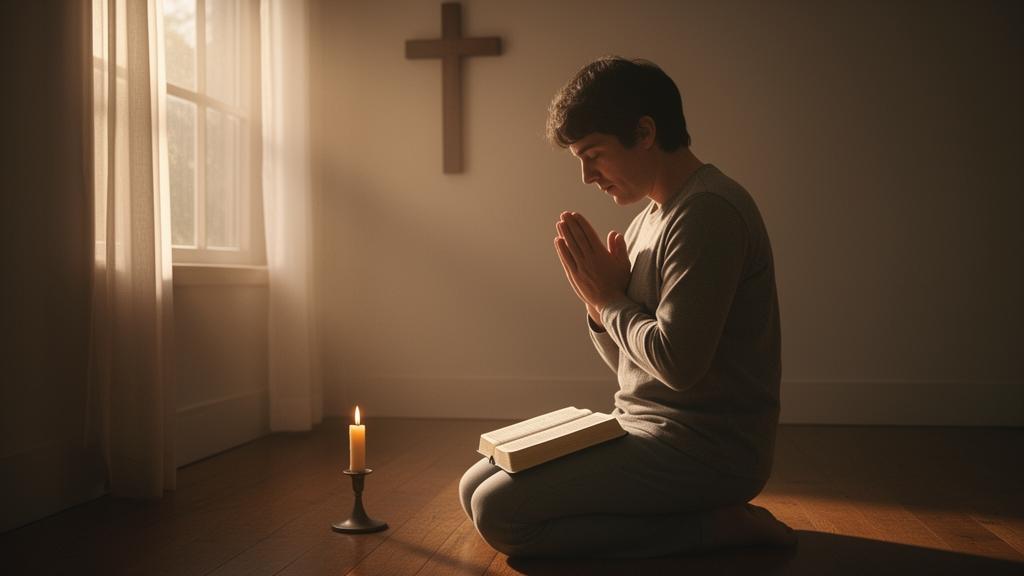
How Prayer & Worship Strengthen Your Relationship With God
Christianity is not a religion of rules — it is a relationship. At its heart, the Christian faith is an ongoing conversation between the believer and God: speaking through prayer, listening through Scripture, and expressing love through worship. This article explores practical ways to deepen that relationship through the daily disciplines of prayer, worship, and reflection.
Why Prayer Changes the Heart
Prayer is often misunderstood as asking God for things. While petition is certainly part of prayer, it is not the whole of it. True prayer is communion — an intimate exchange between the human soul and its Creator.
When Jesus taught His disciples to pray, He began not with requests but with relationship: "Our Father, who art in heaven, hallowed be Thy name" (Matthew 6:9). The Lord's Prayer establishes the order of prayer: first, recognise who God is. Then, align your will with His. Only then, bring your needs.
Regular prayer changes the person who prays. It cultivates humility — because prayer requires admitting that we are not in control. It builds trust — because prayer means speaking honestly to Someone we believe is listening. It produces peace — because "the peace of God, which transcends all understanding, will guard your hearts and your minds in Christ Jesus" (Philippians 4:7).
Catholic tradition offers rich prayer resources: the Holy Rosary, the Divine Mercy Chaplet, and the Liturgy of the Hours all provide structured pathways into God's presence. In Zimbabwean Catholic parishes, morning prayers in Shona and evening prayers in Ndebele help believers begin and end each day in conversation with God.
How Worship Music Deepens Faith
Worship is the natural overflow of a grateful heart. When a believer sings, they are not performing — they are responding to who God is and what He has done. This response, repeated daily, reshapes the inner life.
There is a reason why the Psalms — the Bible's songbook — cover every human emotion. David sang in triumph and in despair. He praised God from mountaintops and cried out from the depths. Worship music gives language to experiences that words alone cannot capture.
Playing a worship song during your morning routine changes the atmosphere of your day. Singing a hymn before bed — as part of a family night altar — seals the day with God's presence. The music does not need to be professional or polished. God listens to the heart, not the vocal range.
As Paul wrote: "Let the word of Christ dwell in you richly as you teach and admonish one another with all wisdom through psalms, hymns, and songs from the Spirit, singing to God with gratitude in your hearts" (Colossians 3:16).
Why Christians Pray Morning and Night
The practice of bookending the day with prayer is ancient. The Psalms themselves reference it: "In the morning, Lord, You hear my voice; in the morning I lay my requests before You and wait expectantly" (Psalm 5:3). And: "On my bed I remember You; I think of You through the watches of the night" (Psalm 63:6).
Morning prayer sets the compass for the day. It is an act of surrender — offering the hours ahead to God before the world makes its demands. Evening prayer is an act of review — thanking God for the day's blessings, confessing shortcomings, and entrusting the night to His protection.
The Catholic practice of the Examen, developed by St Ignatius of Loyola, provides a simple evening framework: recall God's presence, give thanks, review the day's events, acknowledge failures, and look forward to tomorrow with hope. This five-minute practice, done consistently, transforms spiritual awareness over time.
For those who seek nighttime spiritual protection, our articles on nighttime protection prayers and angelic protection during sleep offer Scripture-rich guidance.
How Silence and Reflection Help Believers Hear God
In a world of constant noise, silence is revolutionary. The prophet Elijah discovered that God spoke not in the earthquake or the fire, but in "a still, small voice" (1 Kings 19:12). Many believers struggle to hear God simply because they never create space to listen.
Contemplative prayer — sitting quietly in God's presence without an agenda — is one of the most powerful disciplines in the Christian tradition. The Catholic practice of Lectio Divina (divine reading) combines slow Scripture reading with meditation, prayer, and contemplation. It is not study — it is encounter.
Eucharistic Adoration, where Catholics sit silently before the Blessed Sacrament, is another form of contemplative worship. Many believers report that their deepest spiritual experiences — moments of clarity, consolation, and divine communication — occur not during busy worship services but during quiet hours of adoration.
Practical steps for cultivating silence:
- Start small. Five minutes of silence before prayer is enough to begin.
- Eliminate distractions. Turn off your phone. Close the door.
- Use a single verse. Read one sentence of Scripture slowly, then sit with it.
- Do not judge your thoughts. When your mind wanders, gently return to God's presence.
- Be patient. Hearing God in silence is a skill that develops over months and years.
Building a Daily Spiritual Rhythm
The Christian life thrives on rhythm — not rigidity, but faithful patterns that create space for God. Here is a simple daily structure:
- Morning (5–10 minutes): Prayer of offering, one Scripture reading, one worship song.
- Midday (2 minutes): A brief prayer of gratitude — the Angelus, a spontaneous thank-you, or a moment of silence.
- Evening (10–15 minutes): Family devotion or personal Examen, a hymn, nighttime protection prayer.
This rhythm is not a law — it is a love language. Just as healthy relationships require consistent communication, your relationship with God deepens through daily, faithful attention.
"Draw near to God, and He will draw near to you."
— James 4:8