
The earthquake had not happened yet.
The doors were still closed.
The chains were still fastened.
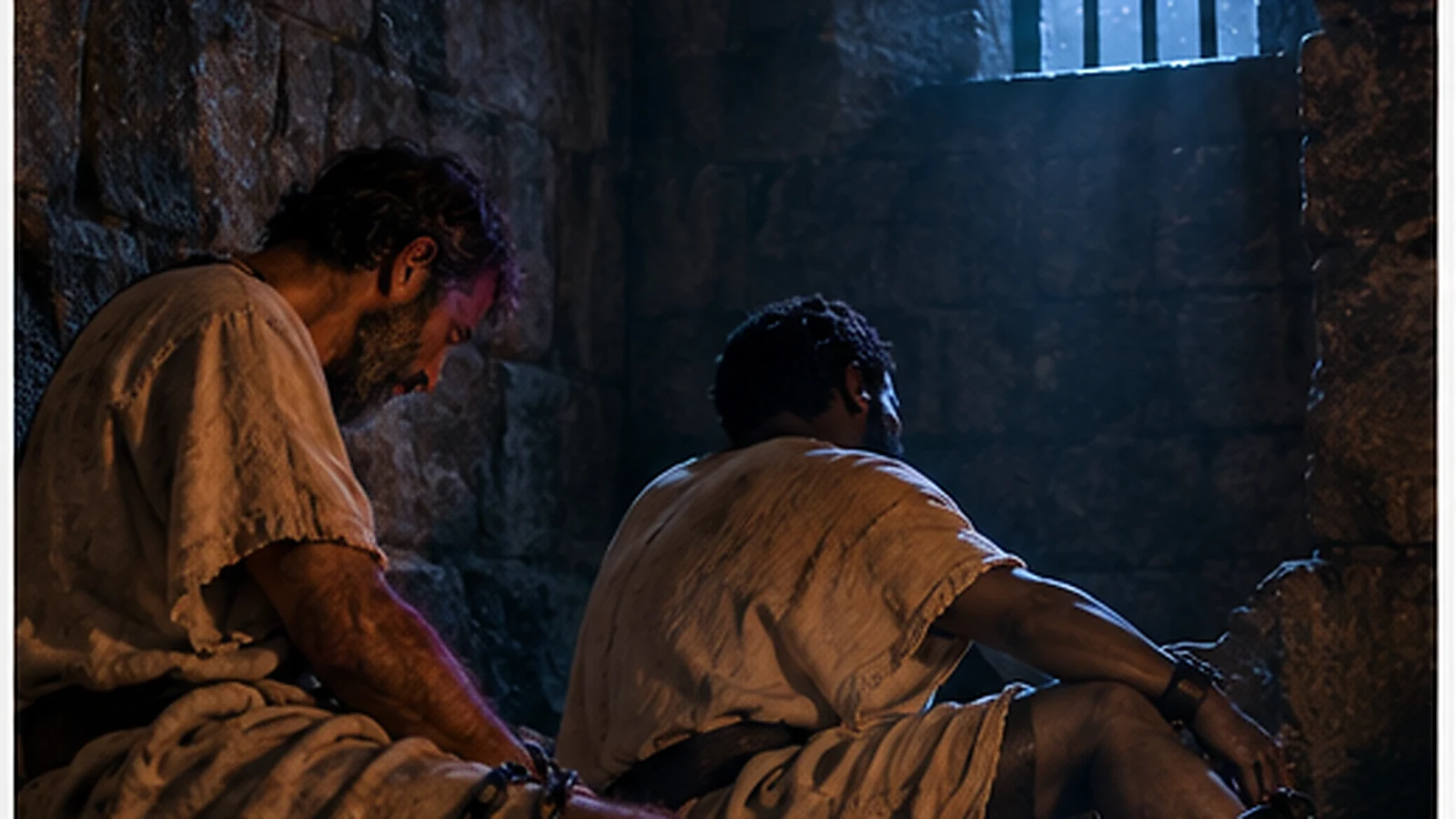
Paul and Silas had already been stripped, beaten with rods and thrown into the inner prison at Philippi. Their feet had been secured in stocks. Nothing in the scene suggested that relief was moments away.
Then Acts gives us one of the most memorable details in the New Testament:
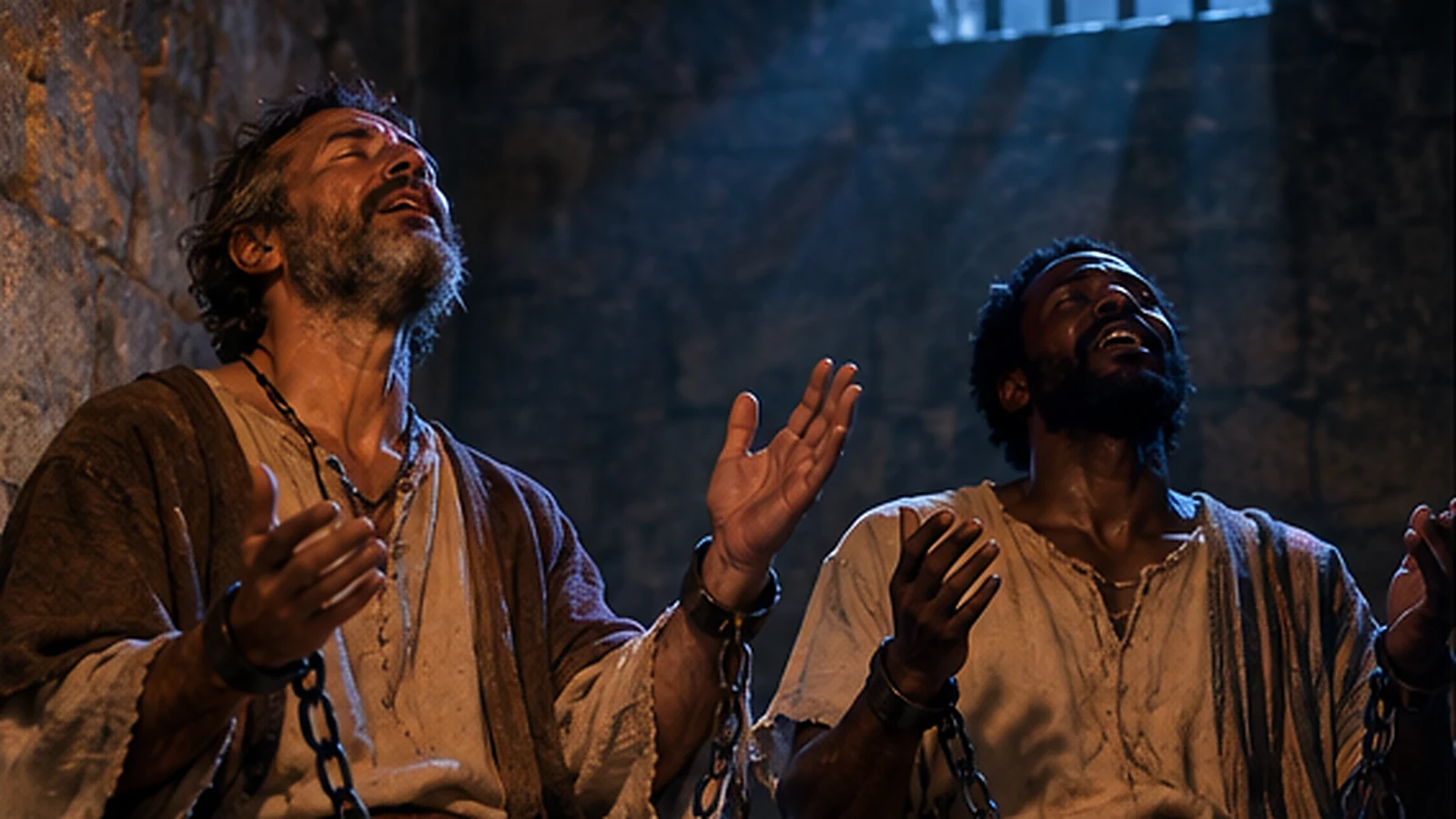
Around midnight, Paul and Silas were praying and singing hymns to God, and the other prisoners were listening.
It is easy to read the story backwards because we already know what happens next. We know about the earthquake. We know the doors open. We know the jailer eventually asks what he must do to be saved.
Paul and Silas did not know any of that when they began to sing.
They sang while the prison still looked like a prison.
That may be the detail we most need to notice.
What Happened Before the Midnight Singing?
Acts 16 does not begin in the prison.
Paul and his companions have travelled to Macedonia and reached Philippi. There they encounter a slave girl whose owners profit from her fortune-telling. After Paul commands the spirit troubling her to leave, her owners realize their income has been disrupted.
The reaction is immediate.
Paul and Silas are dragged before the magistrates. A crowd joins the attack. The magistrates have them stripped and beaten. Then they are thrown into prison with instructions that they be guarded securely.
The jailer responds by placing them in the inner prison and fastening their feet.
Only after this does Acts tell us about the singing.
That order matters.
Their worship was not the response of people who had just received good news. It emerged from bruised bodies, public humiliation, uncertainty and confinement.
Acts Does Not Tell Us Which Hymns They Sang
Christians have wondered for centuries what Paul and Silas might have sung.
A psalm?
A familiar Jewish prayer-song?
An early Christian hymn?
We cannot know from the text.
Acts simply says they were praying and singing hymns to God.
That is enough.
Sometimes we weaken a Bible story by trying to make it tell us more than it does. The mystery of the song is part of the beauty of the scene. We do not know the melody. We do not know the words. We do not know whether their voices were strong or exhausted.
We know the direction of the song.
It was toward God.
And we know somebody else was hearing it.
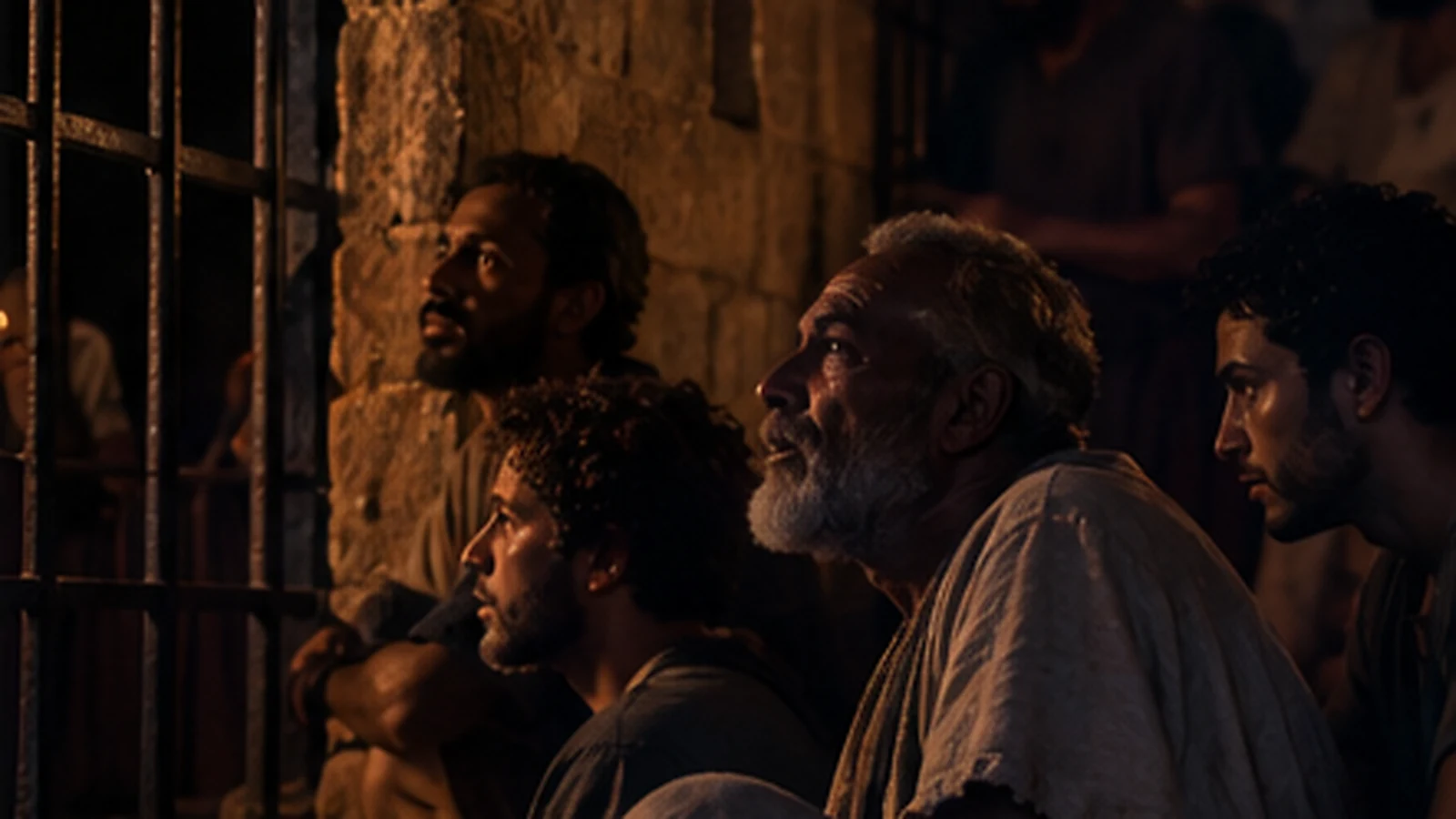
The prisoners were listening.
The Other Prisoners Were Listening
That short phrase is easy to overlook.
Paul and Silas were not worshipping in a private chapel. Their prayer was happening inside a place filled with other people carrying their own stories, fears and guilt.
Acts deliberately tells us that the prisoners listened.
Before the earthquake opened the doors, the song had already crossed a boundary the prison walls could not stop.
This is one reason Christian worship can never be reduced to private emotion.
Someone may hear courage in another person’s voice before they understand the theology behind it.
A child hears a parent pray.
A hospital roommate hears a hymn whispered at night.
A grieving family hears a congregation sing when their own voices will not cooperate.
A person who does not yet believe may still notice what faith sounds like under pressure.
Paul and Silas were prisoners, but their worship was already travelling farther than they were.
Did Their Praise Cause the Earthquake?
This is where the passage is often turned into a formula.
Paul and Silas praised God.
Then an earthquake came.
Therefore, some conclude, praise is the technique that causes God to break chains.
But Acts does not tell us that Paul and Silas were singing in order to manufacture a miracle.
The text gives us a sequence, not a method.
They pray and sing. The prisoners listen. A severe earthquake shakes the foundations. The doors open and the chains come loose.
God acts powerfully in the story. But the point is not that Christians have discovered a spiritual lever that guarantees physical escape whenever they sing with enough intensity.
If that were the message, the rest of the New Testament would become very difficult to explain. Faithful Christians are not always released from prisons. Some prayers are answered in ways we recognize immediately; others are carried for years. Some suffering ends. Some must be endured. Some disciples are delivered from danger, while others become martyrs.
Christian worship is not a transaction in which we give God praise and God owes us an earthquake.
Paul and Silas sang before they knew whether the night would end with freedom.
That is why their song matters.
The Most Surprising Part May Be What They Did After the Doors Opened
If the story were only about escaping prison, verse 26 would be the climax.
The doors open.
The chains loosen.
Run.
But Paul does not run.
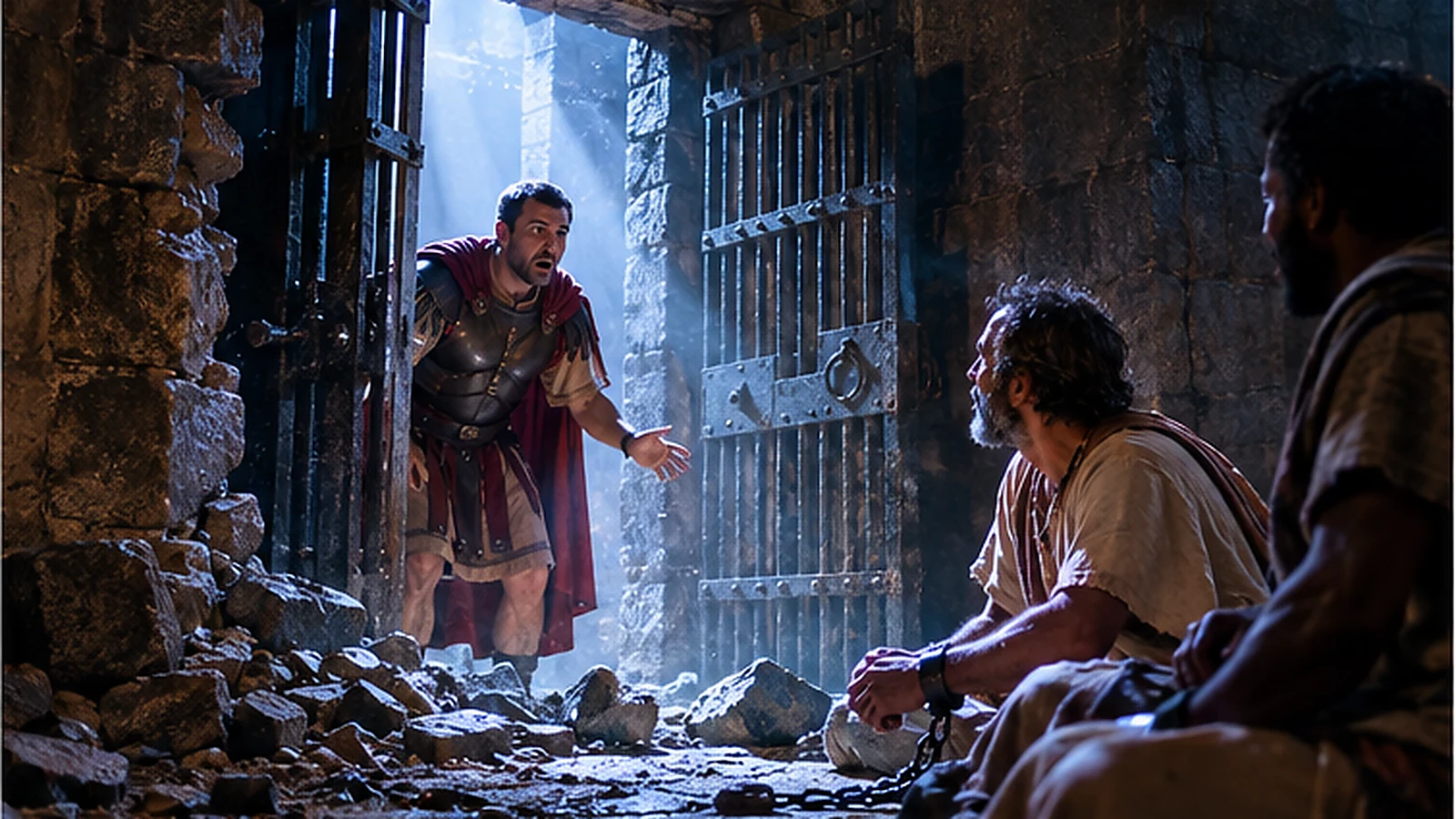
The jailer wakes, sees the open doors and assumes the prisoners have escaped. He is about to harm himself when Paul cries out that they are all still there.
Think about what has happened.
The man responsible for keeping Paul and Silas confined now depends on the prisoners refusing to use their freedom in a way that would destroy him.
The miracle opens the prison.
Love determines what Paul does with the opening.
This is a deeper kind of freedom than merely walking through an unlocked door.
Paul refuses to become free at the cost of another man’s life.
The Story Moves From Chains to a Table
The jailer asks one of the great questions of Acts: what must he do to be saved?
Paul and Silas speak the word of the Lord to him and to his household.
Then the story becomes unexpectedly physical and tender.
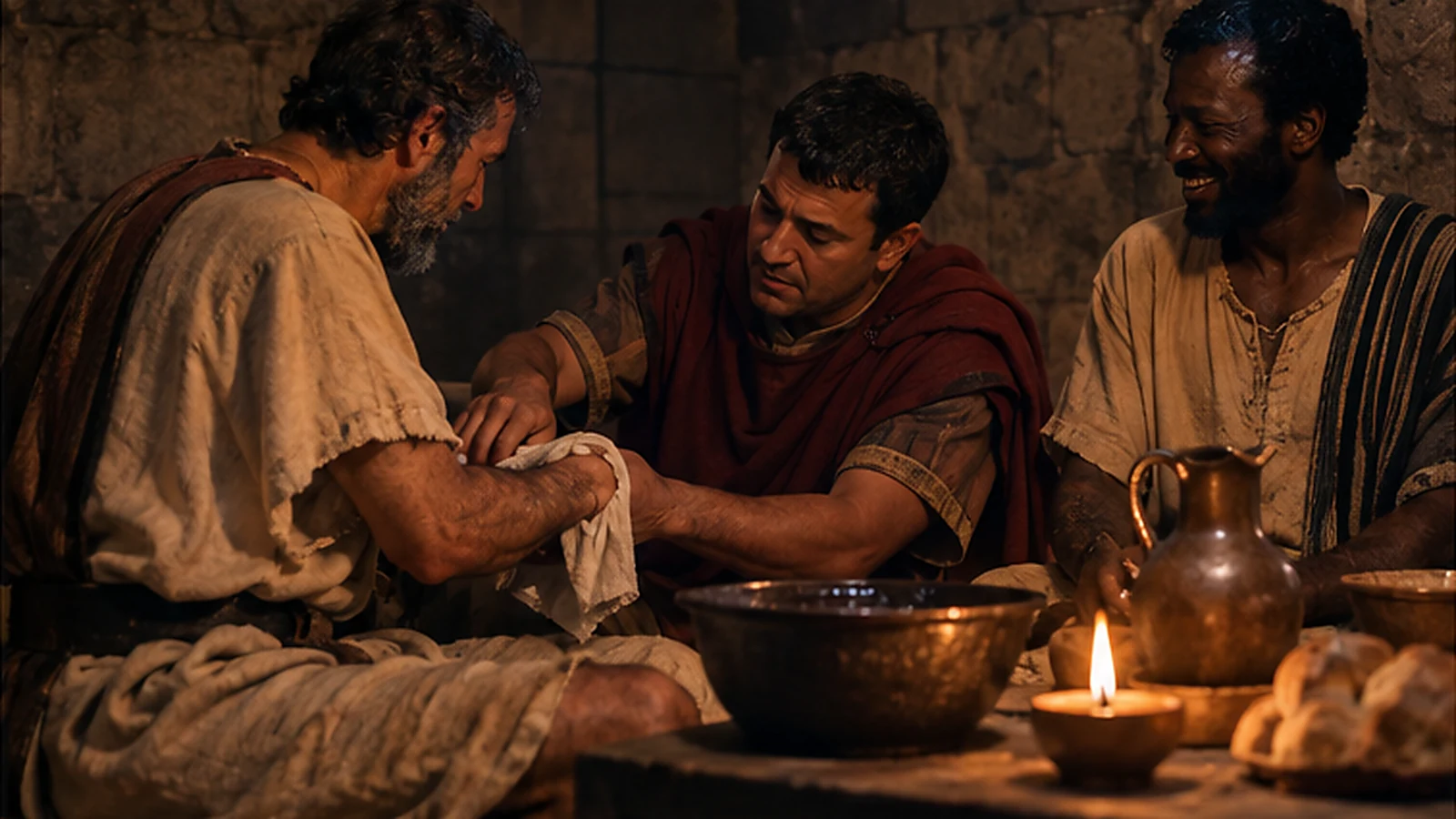
The jailer washes their wounds.
He and his household are baptized.
He brings Paul and Silas into his house.
He sets food before them.
The household rejoices.
Pope Francis once reflected on this passage by noticing the movement between the Word, Baptism and service. The man who guarded wounded prisoners becomes the man washing those wounds and preparing a table.
That is not a small detail.
The Gospel does not merely change what he believes. It begins changing what he does with the people in front of him.
The prison scene ends in hospitality.
Worship Did Not Pretend the Pain Wasn’t Real
There is a shallow way to talk about praise in suffering.
It can sound like Christians are supposed to smile through every wound and call it victory.
Acts does not require that reading.
Paul later insists that the magistrates face what they have done. He does not act as though the beating was harmless. He invokes his rights as a Roman citizen and refuses a quiet release that would pretend the injustice never happened.
Faith did not make him incapable of naming wrongdoing.
That is an important balance.
You can worship God and still say, “This hurt.”
You can forgive and still need boundaries.
You can pray and still seek justice.
You can trust God and still need medical care, counselling, legal help, safety or rest.
A hymn is not a command to deny reality.
Sometimes it is how we refuse to let suffering become the only reality we can see.
What Does Midnight Mean for Us?
Acts tells us the time because it happened around midnight. We should be careful not to turn midnight into a magical spiritual hour.
But the image has become powerful for an obvious reason.
Most people eventually experience a kind of midnight.
The diagnosis you did not expect.
The relationship that changed.
A job loss.
A child you are worried about.
A prayer that seems to have gone unanswered.
Grief that becomes louder when the house becomes quiet.
A season when you cannot see what God is doing next.
Paul and Silas do not give us a formula for escaping such nights.
They give us a picture of faith that can still turn toward God before the doors move.
Maybe that is what worship sometimes is.
Not pretending the cell is a palace.
Not pretending the wounds do not hurt.
Not pretending you know how the story ends.
Simply refusing to let the darkness have the only voice in the room.
Someone May Be Listening to How You Carry the Night
The other prisoners were listening.
That sentence deserves to remain with us.
Our deepest witness may not always happen when life is working beautifully.
Sometimes people watch how we handle disappointment.
How we speak when we are mistreated.
Whether faith makes us cruel or compassionate.
Whether worship makes us escape from other people’s pain or move toward it.
The jailer did not only hear about salvation.
He watched men who could have abandoned him choose to stay.
Then he heard the Word.
Then he washed their wounds.
Then water of Baptism entered his own story.
Then a meal appeared.
Then joy.
Acts 16 is not only a story about prison doors opening.
It is about human beings opening too.
Questions People Often Ask
Why did Paul and Silas sing in prison?
Acts does not give a private explanation of their motives. It tells us that after being beaten and securely imprisoned, they were praying and singing hymns to God around midnight. Their worship shows continuing trust and orientation toward God while their circumstances were still painful and unresolved.
What did Paul and Silas sing?
The text does not identify the hymn or psalm. Suggestions about the exact song are possibilities, not facts.
Did Paul and Silas praise God so the earthquake would happen?
Acts does not say they used praise as a technique to cause the earthquake. Their prayer and singing precede the earthquake, but the narrative does not present worship as a guaranteed formula for miraculous release.
Why didn’t Paul and Silas escape when the doors opened?
Paul’s immediate concern is that the jailer not harm himself. The prisoners remain, and the story moves toward the jailer hearing the Gospel, receiving Baptism with his household, washing Paul and Silas’s wounds and sharing a meal with them.
Where is the story of Paul and Silas in prison?
The imprisonment, midnight prayer and singing, earthquake and conversion of the Philippian jailer are told in Acts 16:16–40, especially verses 22–34.
One Thought to Carry With You
Paul and Silas sang before the earthquake.
That does not mean every song will bring an earthquake.
It means faith can still have a voice before circumstances change.
Maybe your doors have not opened yet.
Maybe the answer has not arrived.
Maybe the night is still the night.
You do not have to pretend otherwise.
But suffering does not have to be the only sound in the room.
Sometimes prayer sounds like words.
Sometimes it sounds like silence.
And sometimes, at midnight, it sounds like a song.
Reader CTA: If you know someone carrying a difficult season, share this article with them—not as a promise that everything will change overnight, but as a reminder that they do not have to wait for perfect circumstances before turning toward God.
Continue With Music
Let the reading turn into worship. Listen, sing along, or open the Scriptures behind this article.
Read the Scripture
Keep Reading
Why Did Jesus Sing Before the Cross? The Last-Supper Detail Most People Miss
Hours before His arrest and Crucifixion, Jesus did something surprisingly human and deeply powerful: He sang. This easily missed detail at the end of the Last Supper may change the way you think about worship, fear and what it means to trust God when life becomes difficult.

The Bible Says God Sings Over You — What Does Zephaniah 3:17 Really Mean?
Many people imagine God listening to our songs. Zephaniah gives us a far more surprising picture: God Himself rejoicing over His restored people with song. But the verse means even more when you discover what comes before it.